How Perfumes Are Made: From Raw Ingredients to Final Bottle
Perfume feels effortless when you wear it. A few sprays, and suddenly there’s presence, mood, memory. But behind that simplicity is one of the most intricate crafts in the world—part science, part art, part obsession.
Creating a fragrance is not just about mixing pleasant smells. It’s about constructing an experience that unfolds over time.
🌿 It starts with raw ingredients
Every perfume begins with raw materials, sourced from around the world:
- Roses from Bulgaria
- Jasmine from India
- Oud from Southeast Asia
- Citrus from Italy
These ingredients can be:
- Natural (plant, resin, wood)
- Synthetic (lab-created molecules for consistency & innovation)
👉 Important truth:
Modern perfumery is a blend of both, not one vs the other.
🧪 Extraction: capturing the scent
Raw ingredients don’t smell like perfume yet. Their essence must be extracted.
Common methods:
1. Steam Distillation
Used for: lavender, eucalyptus
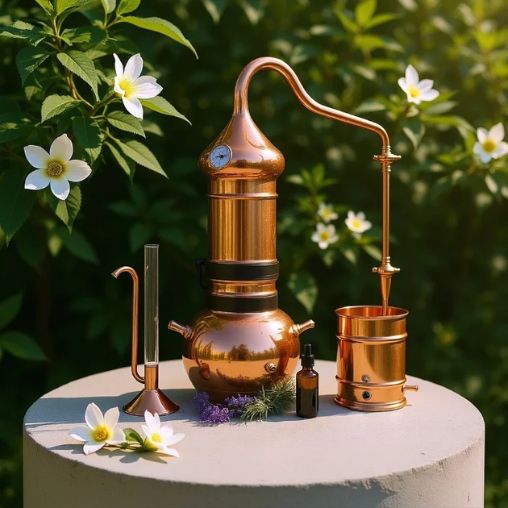
Steam pulls essential oils → condensed into liquid
2. Solvent Extraction
Used for delicate flowers like jasmine
Creates a waxy substance → refined into “absolute”
3. Cold Pressing
Used for citrus peels
Mechanical extraction of oils
4. CO₂ Extraction (modern luxury method)
Cleaner, more precise
Preserves delicate scent profile
🎼 The structure: notes
A perfume is built like music.
🧠 The role of the perfumer
A perfumer (or “nose”) doesn’t just mix ingredients.
They:
- Understand molecular behavior
- Balance volatility
- Design emotional experience
They might test hundreds of variations before finalizing one scent.
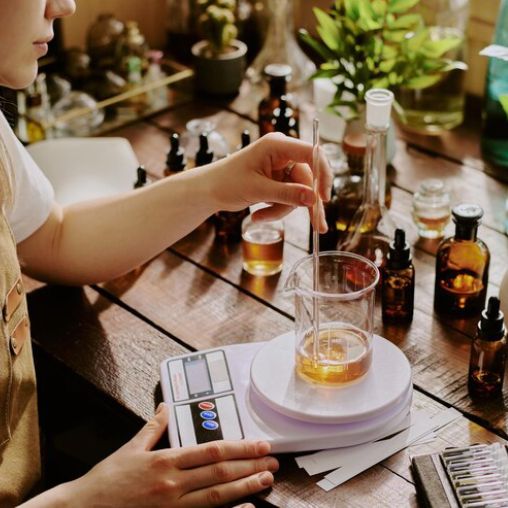
⚖️ Blending and aging
Once the formula is ready:
- Ingredients are blended with alcohol
- Left to macerate (age)
This allows:
- Notes to settle
- Scent to smooth out
High-quality perfumes often age longer.
🧴 Final composition
The concentration defines strength:
- Eau de Toilette (EDT): lighter
- Eau de Parfum (EDP): stronger
- Parfum: most concentrated
Final thought: Perfume is invisible—but its creation is anything but simple. Every bottle holds geography, chemistry, emotion and most importantly intention.